

 Go Back Menu



 Close
Close
How Pharma Manufacturing Works: From Research to Finished Medicines


The journey of a single tablet, capsule, or vial — from a molecule in a laboratory to a finished medicine on a pharmacy shelf — is one of the most rigorously controlled processes in modern industry. Pharma manufacturing combines advanced science, precision engineering, and strict regulatory oversight to ensure that every dose delivered to a patient is safe, effective, and consistent. Understanding this process sheds light on why pharmaceutical companies invest so heavily in infrastructure, compliance, and quality assurance.
The Scale of the Opportunity
India’s pharmaceutical sector, often referred to as the “pharmacy of the world,” is an instructive backdrop for understanding pharma manufacturing at scale. According to industry estimates cited by the India Brand Equity Foundation, the domestic pharmaceutical market was valued at approximately US$57–60 billion in 2025 and is projected to grow substantially over the coming years, supported by exports exceeding US$30 billion annually. India is also home to roughly 3,000 drug companies and over 10,500 manufacturing units, reflecting the depth of manufacturing capability the country has built. Within this landscape, companies such as Mankind Pharma — India’s fourth-largest pharmaceutical company by domestic sales — illustrate how integrated research, formulation, and manufacturing operations come together to serve both domestic and international markets.
Stage 1: Research and Drug Discovery
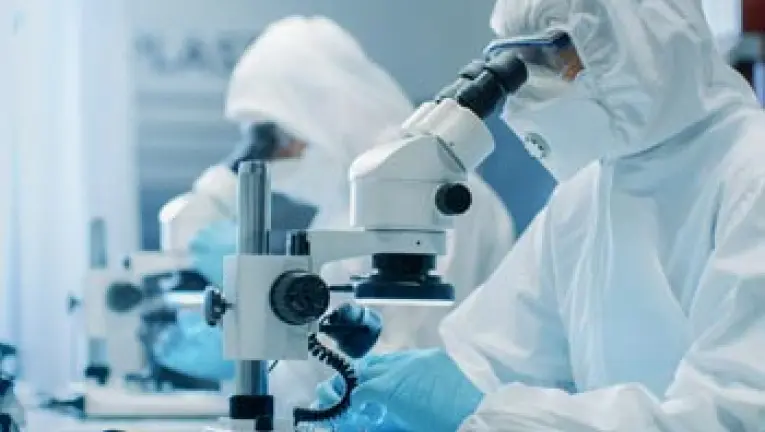
Every medicine begins in the research laboratory. Scientists identify a therapeutic need, isolate or synthesise a candidate molecule, and study how it behaves in biological systems. This stage includes target identification, molecule discovery, preclinical evaluation, and, in parallel, analytical and formulation development activities that prepare promising candidates for further development.
Mankind Pharma operates its R&D function through multiple dedicated centres established since 2011, employing several hundred scientists across formulation, analytical, and biotechnology research (Mankind Pharma, Research & Development). The company notes that it was the first Indian entity, and only the second globally, to develop and commercialise the hormonal active pharmaceutical ingredient Dydrogesterone as a generic option for women’s health, underscoring how formulation research can translate directly into manufacturing capability.
Stage 2: Active Pharmaceutical Ingredient (API) Production
Following successful identification and development of a drug candidate, the Active Pharmaceutical Ingredient (API) is manufactured and subsequently incorporated into the final pharmaceutical formulation. The Active Pharmaceutical Ingredient is the biologically active component of any medicine. API manufacturing demands exceptionally tight process control, since even minor variances in purity or particle size can affect a drug’s safety and efficacy. India’s API sector is significant in global terms: the country is recognised as the third-largest producer of APIs worldwide, contributing roughly 8% of global API supply.
Mankind Pharma manufactures APIs across dedicated units in Rajasthan and Andhra Pradesh, alongside a facility in Aachen, Germany, acquired through Bharat Serums and Vaccines, which produces both APIs and fertility hormones under US FDA approval (Mankind Pharma, Manufacturing). This geographic spread allows API production to be matched to specific regulatory and capacity requirements.
Stage 3: Formulation and Manufacturing
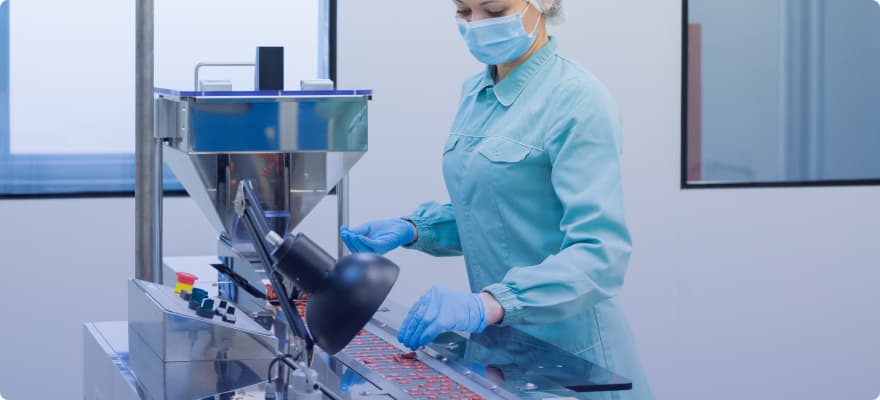
With the API secured, manufacturing teams convert it into a finished dosage form — tablets, capsules, injectables, syrups, ophthalmic solutions, or inhalation products. This stage typically unfolds inside facilities compliant with Good Manufacturing Practice (GMP), which govern everything from equipment qualification to environmental controls and batch documentation.
Mankind Pharma operates a network described on its corporate site as comprising 32 facilities across eight locations, with a combined production capacity exceeding 44 billion units annually. Individual sites are often specialised: one unit in Paonta Sahib, Himachal Pradesh, focuses on injectable manufacturing such as ampoules and vials, a second concentrates on oral dosage forms including tablets and syrups, and a third is dedicated to eye and ear drops that demand particularly exacting quality standards. Additional facilities in Sikkim, Rajasthan, Andhra Pradesh, Maharashtra, and Nepal extend this capacity further, alongside international manufacturing in Germany following the 2024 acquisition of Bharat Serums and Vaccines.
Stage 4: Quality Assurance and Regulatory Compliance
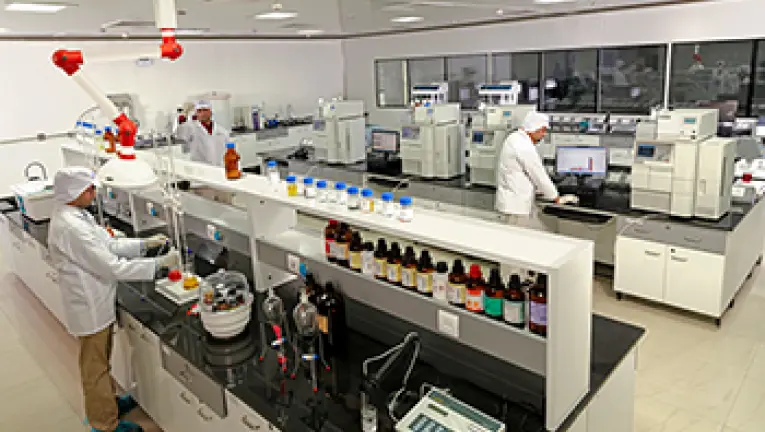
No batch of medicine is released until quality-control testing and quality-assurance review confirm compliance with predefined specifications. This includes testing raw materials on arrival, monitoring in-process parameters during production, and conducting final product analysis before release. Pharmaceutical manufacturers generally align their quality systems with globally recognised bodies, including the International Council for Harmonisation (ICH), the US Food and Drug Administration (USFDA), the European Pharmacopeia, and India’s Central Drugs Standard Control Organisation (CDSCO).
Mankind Pharma describes its quality framework as compliant with the Drugs and Cosmetics Act 1940, 21 CFR Parts 210 and 211 in the United States, EudraLex in Europe, PIC/S guidelines, and Brazil’s ANVISA regulations, and reports having successfully completed 23 international regulatory inspections. The company also references its internal “Quality by Excellence” programme, which focuses on regulatory compliance, laboratory process enhancement, and documentation simplification, alongside advanced analytical technologies such as LC-MS/GC-MS and UPLC for impurity detection and product characterisation.
Stage 5: Packaging and Distribution
The final stage of pharma manufacturing involves packaging medicines in a manner that preserves stability, prevents contamination, and supports patient safety through accurate labelling. From there, finished products move through distribution networks, often spanning multiple countries, to reach pharmacies, hospitals, and patients. Mankind Pharma, for instance, reports a presence across more than 70 countries, supported by its integrated manufacturing and R&D base.
Pharma manufacturing is a multi-stage discipline that blends scientific research, precision engineering, and uncompromising regulatory compliance. From the earliest laboratory experiments to the final packaged product, every step is designed to protect patient safety while ensuring medicines remain accessible and affordable at scale. As companies such as Mankind Pharma demonstrate, building integrated capabilities across research, API production, formulation manufacturing, and quality assurance is central to delivering reliable healthcare outcomes — both within India and across global markets.