
 Go Back Menu




 Close
Close
World Health Day 2026: How Far Has Mankind Come in Global Health?



World Health Day 2026 approaches on April 7, marking a pivotal moment to reflect on global health advancements. Mankind Pharma, a leader in affordable healthcare solutions, exemplifies progress in making quality medicines accessible across India.
World Health Day Overview
World Health Day is celebrated every year on April 7, a tradition that began in 1950 to mark the founding of the World Health Organization (WHO). This global event aims to raise awareness of important health issues and encourage actions that lead to better health outcomes worldwide. In 2026, the theme is “Global Action for Universal Health Coverage.” This theme focuses on ensuring that people everywhere have access to essential health services, including prevention, treatment, rehabilitation, and palliative care, without facing financial difficulties. The WHO identifies universal health coverage as a crucial element of effective, resilient, and equitable health systems.
Historical Milestones in Global Health
Polio Eradication Efforts: The development of the inactivated polio vaccine by Jonas Salk (1952) and the oral vaccine by Albert Sabin (1961) enabled global immunization campaigns that reduced polio cases by more than 99%, preventing an estimated 20 million cases and 1.5 million childhood deaths.
Essential Medicines and Health for All: WHO published the first Essential Medicines List in 1977, guiding basic health systems with evidence-based, cost-effective drugs. The 1978 Alma-Ata Declaration established the “Health for All” goal, laying foundations for universal health coverage.
Further Infectious Disease Milestones: The 1988 Global Polio Eradication Initiative dropped annual polio cases from 350,000 in 125 countries to just two endemic nations by 2022. By 2015, the WHO European Region interrupted indigenous malaria transmission, and child-friendly anti-TB formulations improved pediatric treatment adherence.[who]
These milestones underscore collaborative efforts delivering tangible global health results.
Read more on world health day : Mankind Blog – 10 Simple Health Habits to Start on World Health Day 2026
Recent Progress and Statistics
WHO’s World Health Statistics 2025 reveals mixed outcomes amid pandemic setbacks. Global life expectancy dropped 1.8 years from 2019 to 2021 — the largest recent decline — due to COVID-19, though recoveries are underway. This setback reversed nearly a decade of health gains, driven not only by direct COVID-19 mortality but also by indirect effects like disrupted healthcare access and a surge in mental health burdens, including heightened anxiety and depression cases worldwide. These reversals underscore the fragility of progress and the urgent need for resilient health systems to safeguard future gains
Positively, 1.4 billion more people lived healthier lives by 2024, exceeding the “1 billion healthier lives” target, driven by reduced tobacco use, better air quality, and improved water, sanitation, and hygiene access. However, only 431 million gained essential health services without financial hardship, and 637 million improved emergency protection.
The results of sustained focus on health have been significant. For example, between 2000 and 2020, the region of Central Asia and Southern Asia achieved the greatest overall percentage reduction in maternal mortality ratio (MMR), with a drop of 67.5%, from 397 to 129 maternal deaths per 100,000 live births. This progress reflects two decades of targeted investment in maternal healthcare programs, expanded access to skilled birth attendants, and improvements in emergency obstetric care and referral systems, demonstrating how deliberate policy and service‑delivery reforms can dramatically improve outcomes for women and newborns.
Mankind Pharma’s Role in Health Equity
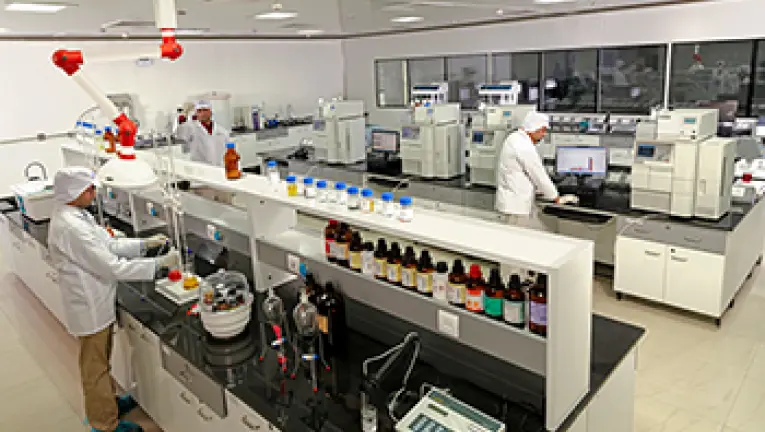
Mankind Pharma stands at the forefront of India’s pharmaceutical innovation, aligning with World Health Day objectives through accessible healthcare. With over 730 scientists across seven top-notch R&D centers and 483 global product filings, the company pioneers drug discovery, advanced formulations, generic APIs, and biotechnology. Recent R&D milestones include the successful completion of Phase 1 clinical trials for the GPR 119 Agonist, a novel chemical entity (NCE) indicated for obesity, diabetes, and metabolic disorders; a breakthrough bioequivalence study in female subjects advancing hormone research and supporting key global filings; and innovative development utilizing complex proteins such as monoclonal antibodies (mAbs), hormones, and peptides.
It offers 200+ specialty drugs tailored for Tier 2-3 cities, achieving the highest coverage in Tier II-IV and rural markets—critical for Bharat’s approximately 65% rural population facing medicine access barriers. Boasting a 43.5 billion-unit installed capacity, Mankind disrupts pricing to deliver affordable medications without quality compromise. Its company-managed distribution network enhances supply chain efficiency, ensuring no citizen is left behind in the journey to a healthier nation. By focusing on rural penetration and cutting-edge R&D, Mankind supports WHO’s universal health goals, making essential drugs available where need is greatest.
Challenges Persisting in Global Health
Despite advances, hurdles remain. Noncommunicable diseases (NCDs) continue rising, and progress toward essential services coverage lags. In low-resource areas, maternal and newborn mortality persists, underscoring the 2026 theme’s urgency.
Financial hardships block access for millions, with only partial recovery post-pandemic. WHO warns of slowing pre-COVID trends, calling for urgent investments in data, programs, and premature death prevention. Addressing these requires scaled public-private partnerships.
Future Directions for 2026 and Beyond
World Health Day 2026 offers a platform to accelerate maternal health investments, as per the theme’s call to end preventable deaths and enhance women’s long-term well-being. Companies like Mankind Pharma can lead by expanding rural R&D, advancing affordable generics, and advancing their innovative pipeline—including new injectable formulations and therapies for metabolic disorders. Governments must prioritize primary care, echoing Alma-Ata’s vision.
Integrating digital tools, like telemedicine, promises broader reach. With sustained innovation—such as Mankind’s GPR 119 Agonist trials, hormone bioequivalence breakthroughs, and complex protein-based drugs—the company exemplifies how private sector efforts complement global initiatives. Collective action can build on 1.4 billion healthier lives achieved, targeting full Triple Billion goals.