

 Go Back Menu



 Close
Close
How Pharmaceutical Research Turns Scientific Discoveries into New Medicines


Medically Reviewed by: Mankind Pharma Medical Team
Quick Answer:
Pharmaceutical research transforms scientific discoveries into potential medicines through a series of stages, including drug discovery, laboratory and preclinical research, clinical trials, regulatory review, manufacturing and post-market monitoring. Each stage evaluates a medicine’s safety, effectiveness, quality and suitability for patients before and after approval.
Every medicine on a pharmacy shelf began as an idea in a laboratory. Converting that idea into a safe, effective, and commercially viable product is the work of pharmaceutical research — a disciplined, multi-year process that blends scientific discovery with regulatory rigour, clinical validation, and market insight. For patients, this process is largely invisible. For the industry, it is the single most important determinant of whether a scientific breakthrough ever reaches a patient at all.
The Scale and Stakes of Drug Development
Developing a new medicine is neither quick nor inexpensive. Industry analyses estimate that bringing a single new drug to market costs approximately $2.6 billion and takes 10 to 15 years from discovery to approval, according to research published via PubMed and corroborated by the Tufts Center for the Study of Drug Development. Deloitte’s 2024 industry review similarly places the average R&D cost per approved asset at $2.23 billion per approved asset within its study cohort among leading global pharmaceutical companies, reflecting rising trial complexity and high attrition rates. Estimates suggest that developing a new medicine may require 10 to 15 years and investments ranging from hundreds of millions to several billion US dollars, depending on the therapeutic area, trial complexity, and methodology used to calculate R&D costs.
These figures explain why pharmaceutical companies invest heavily in dedicated research infrastructure, scientific talent, and phased development frameworks designed to reduce risk at every stage.
From Discovery to Development: How the Process Works
- Drug Discovery and Target Identification
The journey begins with identifying a biological target — typically a protein, gene, or pathway implicated in a disease — and screening or designing molecules that can interact with it favourably. Mankind Pharma’s New Drug Discovery Research (NDDR) division illustrates this stage in practice: its scientists conduct comprehensive drug discovery and development activities “from conceptualization to IND-enabling preclinical and clinical studies,” with a strategic focus on metabolic disorders, autoimmune diseases, and oncology. According to information published by Mankind Pharma in 2024, the company reports that its research pipeline currently includes two novel chemical entities (NCEs) in the preclinical stage targeting autoimmune disorders and cancer, reflecting a long-term commitment to first-in-class therapeutics rather than incremental improvements alone.
- Formulation and Analytical Research
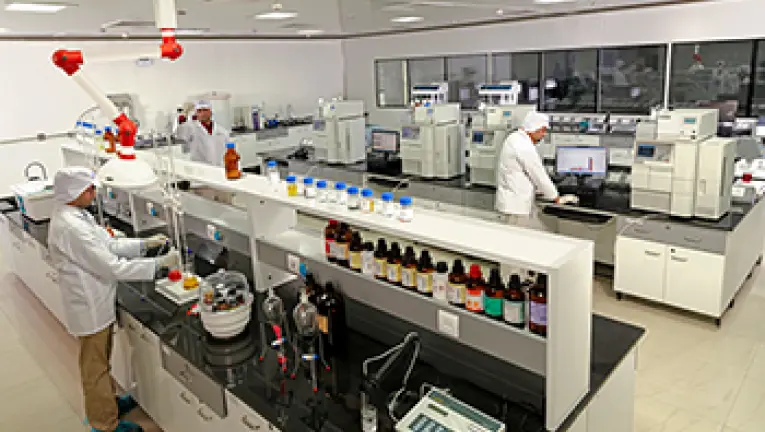
Once a candidate molecule shows promise, formulation scientists determine how it will be delivered — as a tablet, injectable, or topical product — while analytical R&D teams verify its stability, purity, and safety profile. Mankind Pharma’s Analytical R&D function, for instance, conducts stability studies, degradation profiling, and impurity characterisation using advanced technologies such as LCMS, GCMS, UPLC, and ICPMS to meet international standards set by ICH, USFDA, and the European Pharmacopeia. This analytical rigour is what allows a molecule discovered in a lab to be manufactured consistently and safely at scale.
- Active Pharmaceutical Ingredient (API) Development
Parallel to formulation work, companies must secure a reliable, high-quality supply of the Active Pharmaceutical Ingredient itself. Mankind Pharma develops generic APIs, new chemical entities, and advanced intermediates at USFDA and WHO-GMP approved facilities in Rajasthan and Andhra Pradesh, supplying manufacturers across more than 100 countries. Backward integration into intermediates and raw materials strengthens supply chain resilience — an increasingly important consideration given global disruptions to pharmaceutical supply chains in recent years.
- Biologics and Complex Generics
Beyond small-molecule drugs, research organisations are increasingly investing in biologics — recombinant proteins and monoclonal antibodies used to treat autoimmune disorders, cancer, and fertility conditions. Mankind Pharma’s biotechnology R&D team has built capabilities spanning clone and cell line development, upstream and downstream process development, and analytical characterisation of complex biological drugs, supporting a pipeline of biosimilar programmes moving toward clinical trials.
Pharmaceutical Product Development: Turning Science into a Deliverable Product
While drug discovery asks “does this molecule work?”, pharmaceutical product development asks a broader question: “can this become a medicine that is manufacturable, regulatorily compliant, and accessible to the patients who need it?” This stage integrates formulation science, regulatory filings, clinical trial design, and manufacturing scale-up into a single coordinated effort.
Scale matters here. Mankind Pharma operates seven R&D centres across India staffed by more than 730 scientists, including 73 PhD holders, spanning drug discovery, formulation, biotechnology, analytical science, and API development. As of March 2024, the company had filed 60 abbreviated new drug applications (ANDAs) with the USFDA, of which 41 were approved and three tentatively approved, alongside 729 drug product filings across other global markets, of which 504 had received approval. This scale of regulatory filing activity illustrates how pharmaceutical product development functions less as a single event and more as a continuous, portfolio-wide discipline.
Notably, Mankind Pharma reports being the first Indian company to develop and manufacture Dydrogesterone, a molecule used in reproductive health, domestically — a milestone that reflects how sustained investment in product development capabilities can translate into genuine therapeutic firsts, not just generic replication.
Why Pharmaceutical Market Research Matters
Scientific and regulatory success alone does not guarantee that a medicine will reach or benefit patients. Pharmaceutical market research ensures that new products are aligned with actual healthcare needs, prescriber behaviour, affordability constraints, and disease burden patterns within target populations.
Fact Soure:https://pharmuni.com/2025/09/05/pharma-market-research/ (please add nofollow)
This is particularly consequential in markets like India, where affordability and accessibility shape treatment outcomes as much as efficacy does. Mankind Pharma has framed its R&D mission explicitly around this principle, describing its goal as providing “accessible and affordable healthcare to all sections of society” while pursuing scientific innovation. Its portfolio management and new product ideation functions are tasked with assessing unmet medical needs and market gaps before committing resources to full-scale development — a market-research-driven filter that helps prioritise which scientific opportunities are pursued.
This approach also explains strategic decisions such as diversification into therapeutic areas with significant unmet need — metabolic disorders, autoimmune conditions, and oncology — where both disease burden and market opportunity are substantial.
The path from scientific discovery to an approved medicine is long, costly, and scientifically demanding, typically spanning a decade or more and costing billions of dollars industry-wide. Success depends on the tight integration of drug discovery, formulation and analytical science, API development, and biologics research — the combined discipline of pharmaceutical product development — guided throughout by pharmaceutical market research that keeps patient needs and affordability central to decision-making. Companies such as Mankind Pharma, with dedicated research centres, hundreds of scientists, and an expanding pipeline of novel chemical entities and biosimilars, exemplify how this integrated model continues to convert laboratory science into medicines that reach patients at scale.
FAQs
-
What is pharmaceutical research?
Pharmaceutical research is the scientific process of discovering, testing, and validating new compounds to treat or prevent disease. It spans everything from identifying biological targets to formulation science, analytical testing, and clinical evaluation before a medicine can be approved for public use.
-
How long does it take to develop a new drug?
On average, developing a new medicine takes 10 to 15 years, from initial discovery through preclinical research, clinical trials, and regulatory approval. Some complex therapies, such as biologics or gene therapies, can take even longer.
-
How much does it cost to bring a new drug to market?
Industry estimates place the average cost of developing a single approved drug at around $2.2–2.6 billion, factoring in R&D expenses, clinical trial costs, and the cost of compounds that fail during development.
-
What is the difference between drug discovery and pharmaceutical product development?
Drug discovery focuses on identifying and validating a molecule that can act on a disease target. Pharmaceutical product development is the broader process of turning that molecule into a manufacturable, regulatory-compliant medicine — covering formulation, stability testing, scale-up, and regulatory filings.
-
Why do so few drug candidates make it to market?
Only a small percentage of drug candidates successfully progress through preclinical testing, clinical trials, and regulatory review. High attrition occurs due to safety concerns, insufficient efficacy, or commercial nonviability discovered during trials.
-
What role does market research play in pharmaceutical development?
Pharmaceutical market research helps companies understand unmet medical needs, prescriber behavior, disease prevalence, and affordability constraints. It guides decisions on which therapeutic areas and candidates to prioritize, ensuring new medicines address real-world patient and healthcare system needs.
-
What is an Active Pharmaceutical Ingredient (API), and why does it matter?
An API is the biologically active component of a medicine responsible for its therapeutic effect. Reliable, high-quality API development and supply is essential for consistent drug manufacturing, safety, and regulatory compliance.
-
How are biologics different from traditional small-molecule drugs in research?
Biologics, such as monoclonal antibodies and recombinant proteins, are derived from living cells rather than chemical synthesis. Their development requires specialized capabilities in cell line development, bioprocessing, and analytical characterization, making the research and manufacturing process more complex than conventional small-molecule drugs.