

 Go Back Menu




 Close
Pharma Tech: How Technology Is Transforming the Pharmaceutical Industry



The pharmaceutical sector is undergoing a structural shift. Artificial intelligence, advanced analytics, cloud platforms, and automation are no longer experimental additions. They are becoming core to how a modern pharma company discovers, makes, and delivers medicines.
The Scale of the Pharma Tech Opportunity
The economic case for technology adoption is considerable. The McKinsey Global Institute estimates that AI tools could generate $60 billion to $110 billion in annual value for pharma, through gains in operating efficiency, R&D speed and data insights. Adoption is also moving from pilots to practice. GlobalData reports that 34% of pharma firms have already deployed function-specific AI, with drug discovery, clinical trials and medical writing emerging as the key high-impact use cases.
Regulators are adapting as well. The US FDA issued its first guidance on AI for drug and biological products in January 2025, clarifying validation and documentation expectations. This gives pharma companies a clearer framework for deploying such tools in a regulated environment.
Pharma Tech in Research and Development
Research and development is where technology’s influence is most visible. AI enables researchers to analyse large datasets, identify potential drug targets and simulate safety and efficacy before laboratory testing, reducing both time and cost.
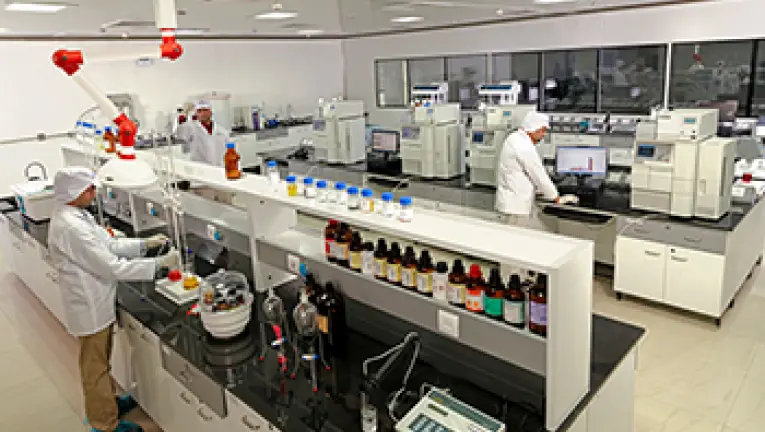
Mankind Pharma illustrates how a research-led pharma company builds on this foundation. 109 new molecules are under development and 42 new products have been launched, across capabilities that include complex injectables and ophthalmics, respiratory, new chemical entities, complex APIs, hormonal products and biologics. The company states that its biotechnology R&D has comprehensive capabilities for clone and cell line development, upstream and downstream process development, and analytical research, housed in a laboratory at its Integrated Research Centre. Industry coverage notes that Mankind operates six dedicated R&D facilities backed by more than 730 scientists.
In September 2025, the company announced a further step. Mankind Pharma partnered with OpenAI to integrate AI across its value chain, using ChatGPT Enterprise and OpenAI’s latest models in digital marketing, research and development, manufacturing, field force enablement and medical affairs.
Pharma Tech in Manufacturing and Quality
Manufacturing is the second area where technology delivers measurable results. Quality is a major cost driver: McKinsey estimates that 25–30% of pharmaceutical manufacturing costs relate to quality, dominated by quality-control laboratory work. This is why digital monitoring and analytics are priorities for manufacturers.
Supply Chain Digitisation: A Measurable Case Study
The most quantified example of pharma tech at Mankind Pharma is its supply chain programme, delivered with Accenture. The company deployed an integrated planning platform connecting demand forecasting, manufacturing, inventory and distribution within a near real-time decision framework across more than 25 international markets.
The reported outcomes are specific. The platform, deployed across 30 manufacturing facilities and more than 50 distribution centres, has reduced drug stock-outs by 75 per cent and optimised inventory by up to 20 per cent. For a pharma company, fewer stock-outs mean more reliable access to medicines for patients, and leaner inventory frees working capital.
Challenges Pharma Companies Must Manage
The transition carries real obligations. Data integrity, model validation and regulatory compliance remain essential in a sector where patient safety is paramount. Technology also requires organisational readiness. Mankind Pharma’s supply chain programme clarified sourcing ownership and standardised end-to-end processes, which indicates that process discipline is a prerequisite for successful digital deployment. Companies that skip this groundwork risk deploying advanced tools on fragmented data.
FAQs on Pharma Tech
What is pharma tech?
Pharma tech refers to the use of technologies such as artificial intelligence, advanced analytics, cloud platforms and automation across the pharmaceutical value chain. This covers research and development, manufacturing, supply chain management and patient delivery.
How is technology changing drug discovery and development?
AI allows researchers to analyse large datasets, identify potential drug targets and simulate safety and efficacy before laboratory testing. GlobalData notes that this reduces both time and cost. Drug discovery, clinical trials and medical writing are among the highest-impact use cases.
How much value can AI create for the pharma industry?
The McKinsey Global Institute estimates that AI tools could generate $60 billion to $110 billion in annual value for pharma. The gains come from operating efficiency, faster R&D and better data insights.
How widely is AI already used by pharma companies?
GlobalData reports that 34% of pharma firms have deployed function-specific AI (June 2026). Adoption is moving from experimentation to routine enterprise use.
How does Mankind Pharma use technology in its operations?
Mankind Pharma has built a cloud-based data platform with Accenture and deployed an integrated supply chain planning platform. In September 2025 it announced a collaboration with OpenAI to apply AI across digital marketing, R&D, manufacturing, field force enablement and medical affairs.
What results has pharma tech delivered in the supply chain?
According to BioSpectrum India’s coverage of Mankind Pharma’s programme with Accenture, the platform has reduced drug stock-outs by 75 per cent and optimised inventory by up to 20 per cent. It operates across 30 manufacturing facilities and more than 50 distribution centres.
Is AI in pharmaceuticals regulated?
Yes. The US FDA issued its first guidance on AI for drug and biological products in January 2025, clarifying validation and documentation expectations. Data integrity, model validation and regulatory compliance remain essential wherever AI is used.
Can pharma tech make medicines more affordable and accessible?
Mankind Pharma states that it uses technology and R&D to advance affordability and accessibility in healthcare. Tools that reduce waste, avoid shortages and shorten development cycles can lower the cost of delivering medicines at scale.