

 Go Back Menu






 Close
Close
Fungal Infection vs Eczema: How to Tell the Difference
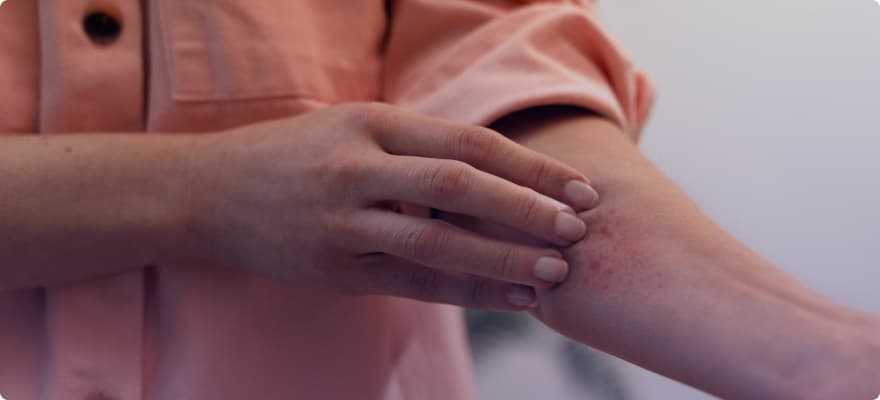


Itchy, inflamed, or irritated skin is one of the most common complaints presenting to pharmacists and general practitioners across India and worldwide. Two of the most frequently confused skin conditions are fungal infection and eczema. While both may produce superficially similar symptoms — redness, itching, and skin discomfort — they are fundamentally different in origin, behaviour, and treatment. Misidentifying one for the other can lead to ineffective self-medication and, in some cases, a worsening of the underlying condition. It is important to distinguish between a fungal infection and eczema, and understand the appropriate course of action for each.
Understanding the Scale of the Problem
Dermatological conditions represent a significant global health burden. According to Mankind Pharma, skin conditions are estimated to affect 1.8 billion people at any given time worldwide, with infections of bacterial, viral, fungal, and parasitic origin being among the most common causes of skin disease — particularly in tropical and resource-limited settings such as India. Eczema alone is a substantial contributor to this burden: research published through the Global Asthma Network Phase I Study found that a median of 6% of children and adolescents globally experience current eczema symptoms, with prevalence trending upward at approximately 1.21% per decade in children. In India specifically, a large-scale study of over 127,000 participants found eczema prevalence reaching nearly 10% in adults.
Fungal infections are equally prevalent. Approximately twenty species of Candida alone are responsible for human skin infections, with Candida albicans being the most common causative organism for superficial and systemic fungal conditions. Understanding how to differentiate these two conditions is therefore not merely academic. It has direct, practical implications for treatment outcomes.
What Is a Fungal Infection?
A fungal skin infection occurs when pathogenic fungi invade the outer layers of skin, nails, or mucous membranes. The most common categories include infections caused by Candida species (candidiasis) and dermatophytes, the latter being responsible for conditions such as tinea pedis (athlete’s foot), tinea cruris (jock itch), and tinea corporis — commonly known as ringworm.
Key characteristics of a fungal infection include:
- Appearance: A fungal infection typically presents as a well-defined, ring-shaped or circular lesion with raised, reddened edges and a clearer centre. Ringworm, for example, is characterised by a pinkish-red circular lesion that is itchy in nature. Candidal infections in skin folds may appear as a red, moist, or macerated rash with satellite lesions at the periphery.
- Location: Fungal infections tend to thrive in warm, moist, and occluded areas of the body — the groin, under the breasts, between the toes, skin folds, and the diaper area in infants.
- Spread: Ringworm and dermatophyte infections are contagious. They are typically contracted through contact with infected individuals, animals, or contaminated surfaces.
- Progression: Without treatment, fungal infections tend to expand outward. They generally respond well to antifungal therapy and carry a favourable prognosis when treated promptly.
- Other signs: Hyperkeratosis (thickening of the outermost layer of skin) and epidermal hypertrophy accompanied by persistent inflammation are recognised diagnostic indicators of candidal fungal infection.
Mankind Pharma addresses fungal infections through its dedicated antifungal portfolio, which includes products based on Itraconazole, Terbinafine, and the OTC ointment Ring-Out, specifically formulated for ringworm (tinea infections).
What Is Eczema?
Eczema, also known as atopic dermatitis, is a chronic, non-infectious inflammatory skin condition. The term is derived from the Greek word meaning “to boil out,” reflecting the historical observation of skin appearing as though it were boiling. Unlike fungal infections, eczema is not caused by a pathogen; rather, it results from a complex interplay of genetic predisposition, immune dysregulation, and environmental triggers.
Key characteristics of eczema include:
- Appearance: Eczema presents as dry, scaly, thickened, and intensely itchy patches of skin. In acute phases, weeping, crusting, and blistering may occur. The skin often appears inflamed and irritated without the characteristic circular border seen in ringworm.
- Location: Eczema commonly affects the inner elbows, backs of the knees, neck, wrists, and around the eyes, particularly in older children and adults. In infants, it may first appear on the cheeks and scalp.
- Triggers: Common triggers include soaps, detergents, certain fabrics (particularly wool and synthetics), allergens such as pollen and dust mites, changes in climate, and certain foods. Environmental factors such as cold, dry air and high humidity can exacerbate symptoms.
- Chronicity: Eczema is a long-term condition. While symptoms may markedly decrease in adulthood for many patients, it is a condition characterised by periods of flare and remission rather than complete resolution through a single course of treatment.
- Non-contagious: Eczema cannot be transmitted from one person to another. This is one of the most important distinguishing factors from fungal infections.
Key Differentiating Factors: Fungal Infection vs Eczema
| Feature | Fungal Infection | Eczema |
|---|---|---|
| Cause | Pathogenic fungi (Candida, dermatophytes) | Genetic/immune/environmental factors |
| Contagious? | Yes (in most cases) | No |
| Appearance | Ring-shaped, defined borders, satellite lesions | Dry, scaly, diffuse patches; no distinct border |
| Common sites | Skin folds, groin, feet, nails | Elbows, knees, neck, wrists |
| Response to steroids | May worsen with steroids alone | Typically improves with topical steroids |
| Course | Resolves fully with antifungal treatment | Chronic; managed but rarely cured |
| Microscopy | Fungal elements visible on skin scraping | No fungal elements present |
One particularly important clinical nuance is the relationship between the two conditions. Research has established that Candida albicans can contribute to the onset and worsening of eczema, and in patients with cutaneous Candida infections, sterile eczematous lesions may occur at other areas of the skin. Furthermore, patients with eczema are at elevated risk of secondary fungal infection due to the compromised skin barrier inherent to the condition.
Why Correct Identification Matters
The treatment protocols for fungal infections and eczema are fundamentally different and, in certain scenarios, mutually counterproductive. Topical corticosteroids, a standard therapy for eczema, can suppress the immune response in a manner that permits an undetected fungal infection to proliferate and worsen. Conversely, antifungal agents will not address the underlying inflammatory and immunological pathways driving eczema.
When to Seek Professional Medical Advice
Individuals should consult a qualified dermatologist or physician rather than self-medicating when:
- The rash does not resolve after two to four weeks of appropriate over-the-counter treatment.
- The condition affects large areas of skin, the face, or the genitals.
- The rash is accompanied by fever, pus, or significant swelling, which may indicate a secondary bacterial infection.
- There is diagnostic uncertainty — which is particularly common given the overlapping appearance of both conditions.
A dermatologist may perform a skin scraping and microscopic examination to definitively confirm the presence of fungal elements, enabling precise diagnosis and targeted therapy.
Both fungal infection and eczema are prevalent, burdensome skin conditions that significantly impact quality of life. As highlighted by Mankind Pharma, dermatological diseases — including those of fungal origin — affect an estimated 1.8 billion people globally, underscoring the importance of accurate diagnosis and accessible treatment. While both conditions share surface-level similarities, their causes, clinical presentations, and treatment pathways are distinctly different. A ring-shaped, well-defined lesion in a moist skin fold is more likely a fungal infection; a chronic, diffuse, scaly patch in the creases of the limbs is more characteristic of eczema. When in doubt, professional medical evaluation remains the most reliable course of action.
Mankind Pharma continues to provide accessible, affordable pharmaceutical solutions for dermatological conditions across India, including its antifungal range (Candiforce, Terbinaforce, Ring-Out) and broader dermatology portfolio — reinforcing its commitment to quality healthcare for all segments of society.
FAQs: Fungal Infection vs Eczema
How do I know if my rash is a fungal infection or eczema?
The shape and location of the rash can give you the first clue. A fungal infection often looks like a ring-shaped patch with a clearly defined, slightly raised border — almost like a circle on the skin. Eczema, on the other hand, tends to look like dry, scaly, rough skin without any distinct shape or border. If your rash is in a warm, moist area like your groin, between your toes, or under your arms, a fungal infection is more likely. If it keeps coming back in the same places — like the inside of your elbows or the backs of your knees — eczema is the more probable culprit.
Can I catch eczema from someone else?
No, eczema is not contagious at all. You cannot catch it from touching someone who has it, sharing towels, or any other form of contact. Eczema is driven by genetics and how your immune system responds to the environment — it is something you are born predisposed to, not something you pick up. A fungal infection, however, is contagious and can spread through direct contact with an infected person, animal, or contaminated surface.
Can a fungal infection look like eczema?
Yes, and this is exactly why so many people get confused. Both conditions can cause red, itchy, and irritated skin. Ringworm (a common fungal infection) and eczema can look remarkably similar at first glance, especially when the ringworm lesion has not fully developed its characteristic ring shape. A pharmacist or doctor can help differentiate the two, and a simple skin scraping test at a clinic can confirm whether fungus is present.
I have been using a steroid cream but my rash is getting worse — what does that mean?
This is an important warning sign. Steroid creams are commonly prescribed for eczema and can work well for it. However, if your rash is actually a fungal infection and you apply a steroid cream to it, the cream can suppress your skin’s ability to fight the fungus, allowing it to spread and worsen significantly. If your rash is getting bigger or angrier-looking after using a steroid cream, stop using it and see a doctor promptly. This is one of the most common reasons fungal infections are mistaken for eczema and end up being undertreated.
Where on the body do fungal infections usually appear?
Fungi love warm, damp, and airless environments. The most common areas for a fungal skin infection include between the toes (athlete’s foot), the groin area (jock itch), under the breasts, in the armpits, in skin folds — particularly in people who are overweight — and in the diaper area in babies. The nails (both fingers and toes) can also be affected. Essentially, anywhere that tends to stay moist and warm is a prime spot for a fungal infection to take hold.
Where on the body does eczema usually appear?
Eczema has its own favoured locations. In older children and adults, it most commonly appears on the inner elbows, the backs of the knees, the neck, wrists, and around the eyes. In babies, the face and scalp are often the first areas affected. Eczema can appear almost anywhere on the body, but unlike fungal infections, it does not prefer warm, sweaty areas — it is more related to skin sensitivity and immune responses than to moisture and warmth.
Is ringworm actually a worm?
No. Despite its name, ringworm has absolutely nothing to do with worms. Ringworm is a fungal infection of the skin caused by a group of fungi called dermatophytes. It earned its misleading name from the ring-shaped rash it typically produces on the skin. It can affect the body, scalp, feet (where it is called athlete’s foot), and groin (where it is called jock itch). It is entirely treatable with antifungal medications.
Can eczema get infected with a fungus?
Yes, and this is more common than most people realise. Because eczema damages the skin’s natural barrier, the skin becomes more vulnerable to infections, including fungal ones. When a fungal infection develops on top of existing eczema, the condition is known as infected eczema, and it can be noticeably harder to manage. If your eczema suddenly looks different, is weeping, has become much more itchy, or is not responding to your usual treatment, it is worth seeing a doctor to check whether a secondary infection has developed.
How long does a fungal infection take to go away?
With the right antifungal treatment, most common fungal skin infections improve within two to four weeks. Ringworm, for example, typically takes about two to four weeks to heal with proper treatment. Nail fungal infections take considerably longer, often several months, because nails grow slowly. It is important to complete the full course of treatment even if the skin looks better before the course is finished, as stopping early can allow the infection to return.
Is eczema a lifelong condition?
For many people, eczema is a long-term condition that they manage rather than cure. It tends to go through cycles of flare-ups (when symptoms get worse) and remission (when symptoms settle down). The good news is that many children who have eczema see it improve significantly as they get older, and some outgrow it entirely. For others, it persists into adulthood. With the right skincare routine, trigger management, and medical treatment during flare-ups, most people with eczema can keep symptoms well under control.
Can stress make eczema or a fungal infection worse?
Stress is a well-known trigger for eczema flare-ups. When the body is under stress, the immune system can behave erratically, and this can cause eczema to worsen. Stress does not directly cause a fungal infection, but it can weaken your overall immune defences, which may make you somewhat more susceptible to picking up an infection. So while stress is more closely linked to eczema flare-ups, maintaining general wellbeing is helpful for both conditions.
Can I treat a fungal infection or eczema at home?
Mild fungal infections — such as athlete’s foot or a small patch of ringworm — can often be treated effectively at home with over-the-counter antifungal creams or ointments. Products such as Ring-Out from Mankind Pharma are available without a prescription specifically for this purpose. Mild eczema can also be managed at home with moisturising creams, gentle soaps, and by avoiding known triggers. However, if you are unsure which condition you have, the rash is spreading or not improving, or it is in a sensitive area like the face or genitals, it is always best to see a doctor before beginning any treatment.
What triggers an eczema flare-up?
Eczema triggers vary from person to person, but common ones include harsh soaps and detergents, synthetic or woollen fabrics, dust mites, pet dander, pollen, certain foods (particularly dairy, eggs, and nuts in some individuals), cold or dry weather, sweating, and stress. Identifying and avoiding your personal triggers is one of the most effective ways to reduce the frequency and severity of flare-ups.
Are children more likely to get fungal infections or eczema?
Children are susceptible to both, but in different ways. Eczema is particularly common in young children — it often first appears in infancy and is one of the most widespread childhood skin conditions globally. Fungal infections in children are also common, with Candida being a leading cause of diaper rash in infants. Scalp ringworm (tinea capitis) is another fungal infection that primarily affects children. If your child has a persistent or unusual skin rash, it is always worth seeking medical advice rather than guessing.
When should I stop self-treating and see a doctor?
You should see a doctor if: your rash has not improved after two to four weeks of using an appropriate over-the-counter treatment; the rash is spreading rapidly; it is affecting the face, scalp, nails, or genitals; there are signs of a more serious infection such as swelling, warmth, pus, or fever; or you simply are not sure what you are dealing with. Applying the wrong treatment — for example, a steroid cream on a fungal infection — can make the problem significantly worse. When in doubt, a proper diagnosis from a healthcare professional is always the safest first step.